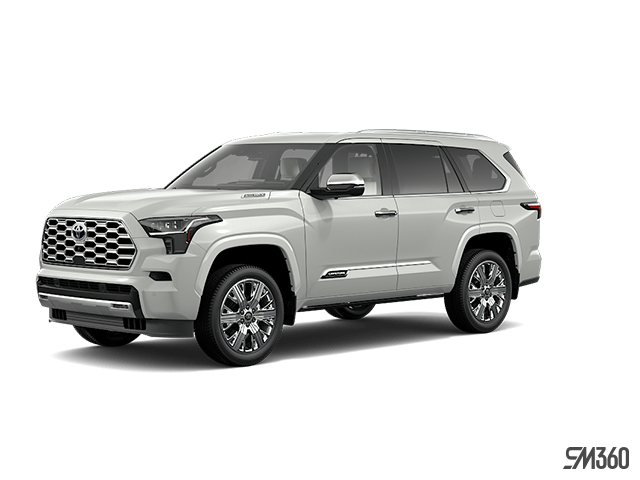
Photo for illustrative purposes only.
Find out more
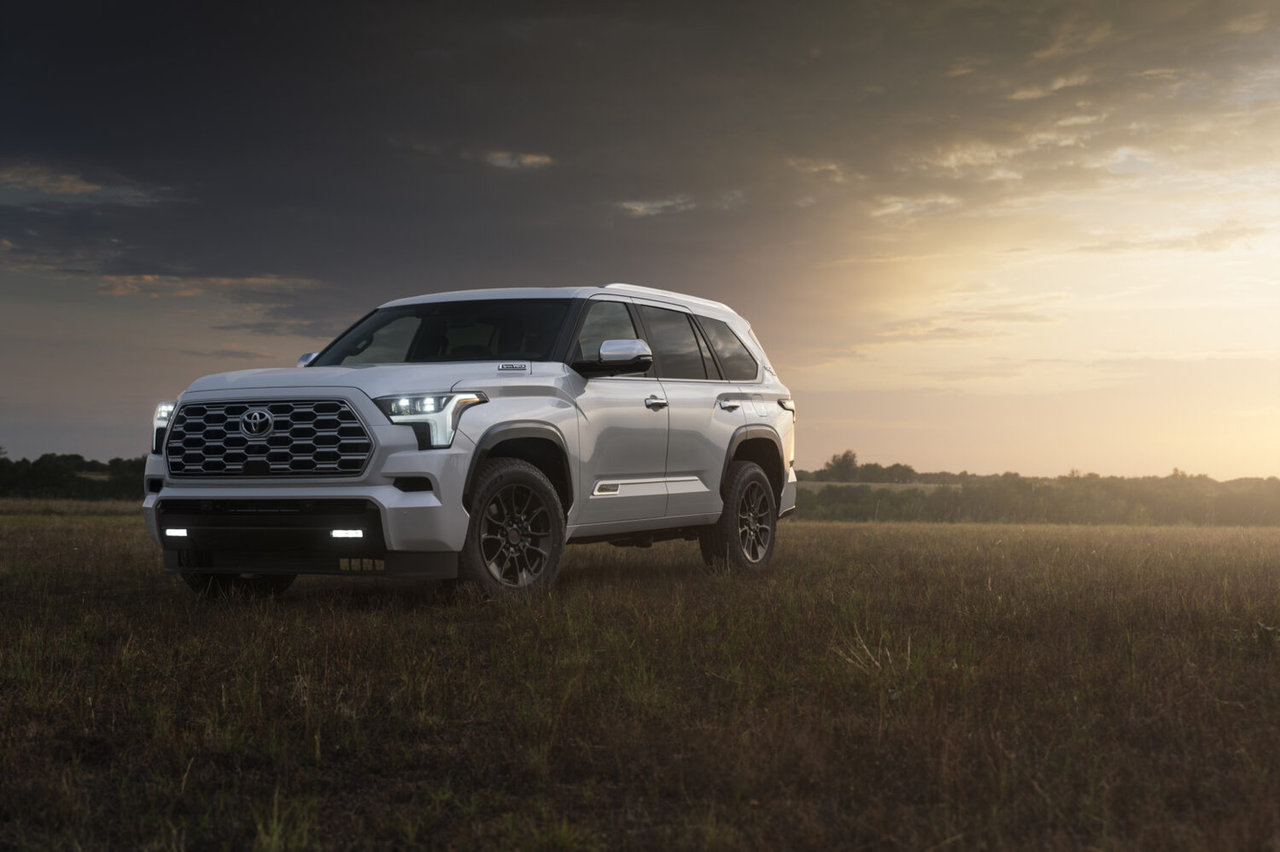
The 2026 Toyota Sequoia is a full-size, exclusively hybrid SUV — and every single model comes with the same advanced driver-assist system from the base SR5 TRD Off Road right up to the Capstone. That system is Toyota Safety Sense 2.5 (TSS 2.5), and understanding what it does, and what it includes, matters before you choose a grade.
TSS 2.5 is not a single feature. It is a coordinated suite of technologies that work together to help the driver avoid, or reduce the impact of, certain collision scenarios. Here is a clear breakdown of what the system covers and why it is meaningful regardless of which Sequoia trim you choose.
TSS 2.5 is a multi-layer system that uses radar and camera inputs to monitor the road ahead, the lane, traffic signs, and oncoming pedestrians. The key components in the 2026 Sequoia's package are:
Pre-Collision System (PCS) with Pedestrian Detection This is the backbone of TSS 2.5. The system monitors the road ahead and can detect vehicles, pedestrians, and cyclists. If the system determines a collision is imminent and the driver has not responded, it can trigger an audible and visual alert and then apply autonomous emergency braking to reduce impact speed or avoid the collision entirely.
Pre-Collision System with Risk Avoidance Emergency Steering Assist An extension of the PCS, this function can provide steering assistance to help the driver steer around an obstacle when braking alone may not be sufficient to avoid a collision. The system detects both the risk of collision and whether a lane-change manoeuvre is available.
Left Turn Oncoming Vehicle Detection/Braking This feature addresses one of the more common urban collision scenarios: turning left across oncoming traffic. The system can detect an oncoming vehicle during a left turn and apply automatic braking if the system determines a collision risk is high.
Right/Left Turn Oncoming Pedestrian Detection/Braking At intersections, this feature can detect pedestrians entering the vehicle's path during a turn and apply braking to reduce the risk of striking a pedestrian who may not be in the driver's direct line of sight.
Automatic High Beam (AHB) The system detects oncoming vehicles and preceding vehicles using the camera and automatically switches between high and low beams to maximize visibility without blinding other drivers.
Lane Tracing Assist (LTA) When the vehicle is within detected lane markings and Dynamic Radar Cruise Control is active, Lane Tracing Assist provides steering support to keep the vehicle centred in its lane.
Dynamic Radar Cruise Control (DRCC) — Full Speed Range The full-speed range version of Toyota's radar cruise control adjusts vehicle speed to maintain a set following distance from the vehicle ahead, including the ability to bring the vehicle to a complete stop and resume — particularly useful in stop-and-go highway traffic or on longer commutes.

The 2026 Sequoia is available in five grades: SR5 TRD Off Road, Limited Nightshade, TRD Pro, Platinum, and Capstone. Every grade carries the full TSS 2.5 package — no features are split by trim. The system's components listed above, including the Pre-Collision System with Risk Avoidance Emergency Steering Assist, Left Turn Oncoming Vehicle Detection, and Right/Left Turn Oncoming Pedestrian Detection, are all present on every 2026 Sequoia sold in Canada.
In addition to TSS 2.5, every Sequoia includes:
This means buyers on any Sequoia budget receive the same foundational safety technology. Grade selection affects interior luxury, audio systems, suspension tuning, seating configuration, and powertrain — not the safety suite.
A common question is how TSS 2.5 relates to Toyota Safety Sense 3.0, which appears on models like the Corolla, Camry, and Tacoma. TSS 2.5 and TSS 3.0 share core capabilities including Pre-Collision System with Pedestrian Detection, Automatic High Beam, Lane Tracing Assist, and Dynamic Radar Cruise Control. The key additions in TSS 2.5 that are specific to the Sequoia's configuration include the Left Turn Oncoming Vehicle Detection/Braking and Right/Left Turn Oncoming Pedestrian Detection/Braking — both particularly relevant in an urban full-size SUV context.
|
TSS 2.5 Feature |
All 5 Grades |
|---|---|
|
Pre-Collision System with Pedestrian Detection |
Standard |
|
Risk Avoidance Emergency Steering Assist |
Standard |
|
Left Turn Oncoming Vehicle Detection/Braking |
Standard |
|
Right/Left Turn Oncoming Pedestrian Detection |
Standard |
|
Automatic High Beam |
Standard |
|
Lane Tracing Assist |
Standard |
|
Dynamic Radar Cruise Control (Full Speed Range) |
Standard |
The 2026 Toyota Sequoia is built on the i-FORCE MAX hybrid platform, producing 427 system horsepower and 583 lb-ft of torque. All models feature on-demand four-wheel drive and a 9,000-pound towing rating. If you want to understand how the five grades differ — from the off-road-ready SR5 TRD Off Road to the Capstone's luxury appointments — the team at Longueuil Toyota in Longueuil is ready to walk you through the lineup.
Photo for illustrative purposes only.
Find out more
5 Reasons Why the 2026 Toyota 4Runner Holds Its Own on Gravel and Trails
Summer in Quebec means gravel forestry roads, cottage driveways that soften up after a heavy rain, and the occasional ATV trail snuck into a long...
Read more
5 Questions Families Ask Before Choosing the 2026 Toyota bZ as a Daily Driver
Choosing an electric SUV for family life in Quebec means balancing driving range against winter weather, and cargo space against charging speeds....
Read more
Do You Need Three Rows or a Premium Crossover? The 2026 Toyota Highlander Hybrid and Crown Signia Hybrid, Compared
Two of Toyota's most appealing hybrid SUVs share a lot of common ground — a focus on efficiency, standard AWD, and Toyota Safety Sense as a...
Read morePowered and developed by
